Source Elderly Business Feature Phone for Seniors, Retail, and Gifts
Find 30 elderly business feature phone models with GSM and CDMA support. Compare specs like 2G E6000 and VK-S92D, including battery capacity, screen size, and SIM slots for reliable communication needs; compare the available evidence and request quotations based on your requirements.
Key considerations
Products List



Comprehensive Sourcing Guide
Elderly Business Feature Phone Sourcing Guide
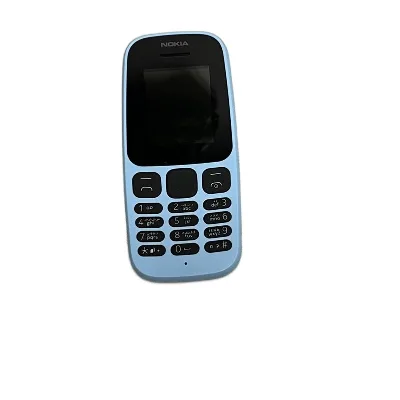
Procuring an elderly business feature phone requires balancing rugged durability with simplified usability for a demographic that prioritizes reliability over advanced computing. The observed market data indicates a strong focus on devices with non-touch interfaces, specifically bar-style designs that accommodate users with limited dexterity. Buyers must verify that the selected unit supports multiple languages and offers a clear, non-touch display to ensure accessibility without the complexity of modern smartphones.
Commercial viability in this segment often hinges on specific hardware configurations, such as the presence of dual or quad SIM slots and substantial battery capacity for extended standby times. The supply chain frequently offers models with removable batteries and basic connectivity like Micro USB, which simplifies maintenance and charging logistics for business users in remote or resource-constrained environments. Sourcing strategies should prioritize suppliers who can consistently deliver these core functional attributes without compromising on build quality.
Product Scope and Observed Listing Signals
The current market inventory for elderly business feature phones reveals a distinct segmentation based on screen size and battery capacity, ranging from compact units under 2.0 inches to slightly larger 2.0 to 2.5-inch displays. Listings frequently highlight specific model identifiers like the E6000 or VK-S92D, which serve as reference points for buyers to distinguish between different hardware generations and form factors. Procurement teams should carefully cross-reference these model numbers against the physical dimensions provided, as sizes vary significantly from 134mm to 142mm in length, impacting pocketability and handling.
Observations of product listings also show a wide variance in battery specifications, with some units offering capacities between 2001mAh and 3000mAh while others are configured with smaller 600mAh to 1000mAh cells. This discrepancy directly influences the advertised standby time, with high-capacity models claiming up to 400 hours of operation. Buyers must scrutinize these claims against the actual physical size of the device, as larger batteries often necessitate thicker chassis designs that may conflict with the ergonomic requirements of elderly users.
Technical Specifications to Verify
When evaluating technical specifications, the network standard is a critical verification point, as the observed data includes devices supporting GSM, CDMA, and 3G protocols. A single-core CPU is standard for this category, ensuring that the device remains responsive without consuming excessive power, but buyers must confirm that the specific network bands align with the operational regions of their intended users. The absence of a touch screen and the reliance on DTMF dialing are essential features that define the user experience, requiring confirmation that the keypad layout is intuitive and tactile.
Storage and connectivity options also demand rigorous verification, particularly regarding SIM card slots and expansion capabilities. While some models support up to four SIM slots and SD card expansion, others are limited to a single SIM configuration, which dictates the flexibility of the device for multi-network business operations. Additionally, the presence of a flashlight and the specific screen material, such as TFT, should be confirmed to ensure the device meets the lighting and visibility needs of outdoor or low-light business scenarios.
Compliance and Safety Documentation
Ensuring that elderly business feature phones meet regional safety and electromagnetic compliance standards is a non-negotiable step in the procurement process. Although specific certification names are not universally listed in the provided data, buyers must request proof of compliance with local telecommunications regulations and electrical safety standards for the target market. This documentation validates that the device's radio frequency emissions and battery safety mechanisms adhere to legal requirements, protecting the business from liability and ensuring the device can be legally imported and sold.
Packaging and material safety are also critical components of the compliance checklist, especially given the use of plastic cases and standard packaging materials observed in the market. Buyers should verify that the materials used in the device casing and the packaging do not contain hazardous substances prohibited in their destination country. Furthermore, the inclusion of a standard package or gift box should be confirmed to ensure that the product arrives in a condition that meets the expectations of corporate gifting or bulk distribution programs.
Cost Drivers and Commercial Terms
The cost structure for elderly business feature phones is heavily influenced by the complexity of the network support and the battery capacity included in the unit. Models supporting multiple network standards like GSM and CDMA, or those with larger battery capacities exceeding 2000mAh, typically command a higher price point compared to basic single-band, low-capacity alternatives. Buyers must analyze the total cost of ownership, considering that higher initial unit costs may be offset by reduced replacement frequency due to superior battery life and durability.
Commercial terms such as Minimum Order Quantity (MOQ) and customization options play a significant role in the final procurement budget. The observed MOQ range spans from 1 to 10,000 units, offering flexibility for small pilot runs or large-scale deployments. Additionally, the availability of customization services allows businesses to tailor the device with specific branding or color options, which can add value but may also introduce additional costs or lead time adjustments that must be factored into the overall project timeline.
Supplier Qualification and Quality Control
Supplier qualification for this product category requires a deep dive into their manufacturing capabilities and quality assurance processes, particularly regarding the assembly of key components like the keypad and battery housing. Buyers should verify that the supplier has a proven track record in producing bar-style phones with removable batteries, as these specific design elements require precise mechanical tolerances to ensure longevity. The origin of the products, often listed as Guangdong, China, suggests a concentration of manufacturing expertise, but buyers must still validate the specific factory's quality control protocols.
Quality control checks should extend to the functional testing of critical features such as the Micro USB data interface and the reliability of the DTMF dialing system. Since these devices are often used in critical business communications, any failure in the network connection or power management could lead to significant operational disruptions. Buyers should request sample units for rigorous testing to confirm that the advertised standby times and network performance are consistent with the supplier's claims before committing to a large order.
Long-Term Procurement Checks
Establishing a long-term procurement strategy for elderly business feature phones involves monitoring the supplier's ability to maintain consistent supply of spare parts and firmware updates. Given the specialized nature of these devices, the availability of replacement batteries, chargers, and keypads is essential for extending the lifecycle of the deployed fleet. Buyers should negotiate service level agreements that guarantee the availability of these components for a defined period, ensuring that the business can maintain its operations without facing obsolescence issues.
Regular performance reviews of the deployed devices are also necessary to identify any recurring issues or areas for improvement in future procurement cycles. Buyers should track metrics such as battery degradation rates and network connectivity stability to assess whether the current models continue to meet the evolving needs of the elderly business user base. This data-driven approach allows for informed decisions when renewing contracts or switching to newer models that may offer enhanced features while maintaining the core simplicity required by the target demographic.
FAQs
How large are the screens on these elderly business feature phones?
Screen sizes vary across the listed models, ranging from under 2.0 inches up to 2.5 inches. Most units use TFT display panels with black or white color output, and some models have narrow bezels of 3 to 4 millimeters. None of the listed phones include a touch screen, so all navigation is handled through physical keys.
What battery capacities and standby performance can buyers expect?
Battery capacities span several tiers, from under 800mAh up to the 2001mAh to 3000mAh range, with one listed model using a 2400mAh battery. Standby time reaches up to 400 hours on that model. Batteries are removable on the listed phones, which simplifies replacement for elderly users and lowers long-term maintenance costs.
Can these phones support multiple SIM cards and storage expansion?
Yes, SIM configurations vary by model, including single SIM, dual SIM, and a quad SIM variant with four SIM slots. One model also offers an SD card slot for storage expansion, and storage expansion is supported on listed units. Network support covers GSM on most models, with some also handling CDMA and 3G frequencies.
What network standards do these feature phones work with?
The listed phones primarily operate on GSM 2G networks, and one model supports GSM, CDMA, and 3G bands. A CDMA-supported variant is also available. Before ordering, confirm which bands your target carrier uses, since 2G networks have been retired in some countries. Compatibility checks against local frequency requirements are strongly recommended.
Can buyers customize these elderly feature phones before ordering?
Yes, customization is available on the listed products, and customization is marked as a supported attribute. Color options include black and green. Standard packing applies to most models, while one model ships in a giftbox plus carton box. Discuss logo, packaging, and language requirements with suppliers, since multiple language support is standard on these devices.
What physical and design characteristics do these phones have?
All listed models use a bar-style, key-phone design without a touch screen, aimed at elderly users. Physical dimensions include 134 by 60.3 by 29.3 millimeters on one model and 142 by 48 by 15.5 millimeters on another. Features include a flashlight, display, micro USB data interface, and DTMF dialing, while voice mail is not supported.